Sentenced to Debt: The Hidden Financial Penalties That Extend Punishment Far Beyond Prison Walls

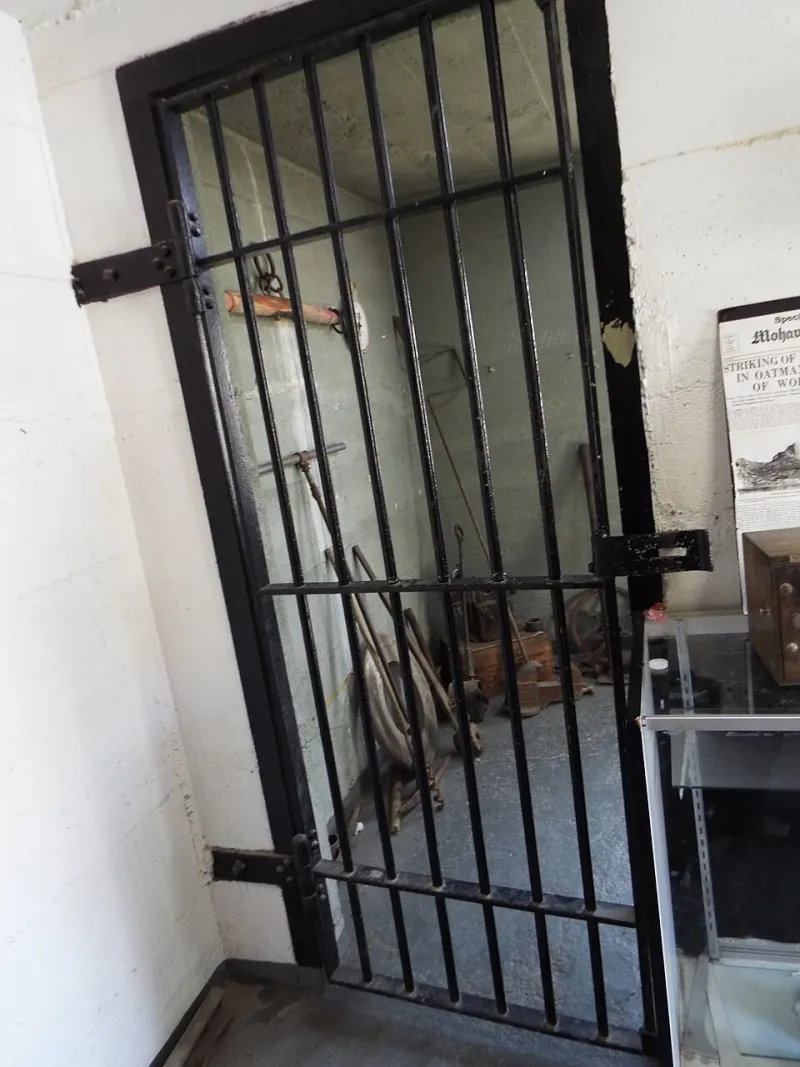
Photo: Sasha • Stories, CC0, via Wikimedia Commons
When Darnell Washington walked out of a Mississippi correctional facility in 2019 after serving three years for a non-violent drug offense, he carried with him something the courts had not mentioned at sentencing: a bill. Court costs, a supervision fee, a public defender surcharge, a jail booking fee, and a victim services fund assessment had accumulated to more than $4,200 — a sum that, on the wages of a recently incarcerated man navigating a hostile labor market, might as well have been $4 million.
Washington's experience is not exceptional. It is, in fact, the architecture of a system designed to perpetuate financial dependency long after the formal sentence concludes. Across the United States, state and local governments have quietly constructed an elaborate lattice of monetary sanctions that attach to criminal convictions — fees that lawmakers rarely debate openly and that judges often impose with little discretion. The result is a form of post-conviction servitude that disproportionately ensnares the poor, and that researchers and advocates increasingly describe as a mechanism for extracting revenue from the most economically vulnerable people in American society.
The Anatomy of a Fee Schedule
The terminology alone reveals the system's ambition. Court costs. Probation supervision fees. Electronic monitoring charges. Drug testing fees. Restitution orders. Fines. Surcharges. Assessments. Each label sounds administrative, even bureaucratic — but together they constitute what legal scholars have termed "the other sentence," a financial punishment that runs parallel to incarceration or community supervision and frequently outlasts both.
A 2022 survey by the Brennan Center for Justice found that 83 percent of formerly incarcerated people had court-ordered debt they could not pay. In states like Florida, Alabama, and Texas, the fee schedules attached to even misdemeanor convictions can reach into the thousands of dollars. Felony convictions carry correspondingly heavier burdens. In many jurisdictions, failure to pay these fees constitutes a violation of probation — meaning that poverty, in practice, becomes a criminal offense.
The mechanisms of enforcement compound the original harm. Interest accrues. Collections agencies enter the picture. Driver's licenses are suspended for non-payment, severing access to employment in car-dependent communities. In some states, unpaid fees are reported to credit bureaus, poisoning the financial futures of people who have already served their formal sentences. The system, in other words, is designed not to conclude but to perpetuate.
Who Pays, and Why
The distributional consequences of this architecture are not incidental — they are structural. Because the criminal legal system itself reaches into Black, Latino, and Indigenous communities at vastly disproportionate rates, the financial penalties it imposes follow the same demographic contours. A white professional convicted of a comparable offense and carrying comparable debt is far more likely to have family resources, savings, or credit access that can absorb the blow. A low-income Black man in a rural county has no such cushion.
Researchers at the University of Washington have documented what they call the "fee-poverty spiral": individuals who cannot pay fees accumulate violations, which generate additional fees, which produce warrants, which lead to re-incarceration, which destroys employment, which makes payment even less likely. The spiral is not accidental. Many states have come to depend on fee revenue to fund court operations, public defender offices, and even general government functions — creating a fiscal incentive to maintain, rather than resolve, the debt burden carried by people with convictions.
This revenue dependency is particularly acute at the county level. A 2021 report from the Fines and Fees Justice Center found that in some Southern counties, court-imposed fees constitute a meaningful share of the local justice system's operating budget. The carceral state, in this configuration, is not merely punitive — it is predatory.
Campaigns Demanding a Different Calculus
Organizers and advocates have been building sustained pressure to dismantle this system, often starting at the municipal and state levels where fee schedules are set and where legislative change is most accessible.
In California, a coalition led by Debt Free Justice California successfully pushed for the elimination of more than twenty categories of juvenile court fees in 2021 — a landmark victory that acknowledged, explicitly, that billing young people and their families for the cost of their own prosecution was both unjust and counterproductive. The coalition subsequently turned its attention to adult courts, where the fee landscape is considerably more complex.
In Illinois, advocates working through the Cook County Public Defender's office and community organizations secured legislation in 2022 abolishing dozens of criminal and traffic court fees that had disproportionately burdened Black residents on the city's South and West Sides. The campaign framed the issue not as charity but as reparative policy — a recognition that these fees had functioned as instruments of racialized economic extraction.
The national Fines and Fees Justice Center has coordinated legislative campaigns in more than thirty states, working alongside directly impacted people to document the human cost of monetary sanctions and to press for statutory reform. Their model legislation calls for ability-to-pay hearings before any fee is imposed, the elimination of fees that fund government operations rather than compensating victims, and automatic waiver provisions for individuals below the federal poverty line.
Restitution and the Limits of Reform
Of all the financial penalties attached to criminal convictions, restitution presents the most complex political terrain. Unlike supervision fees or court costs — which are straightforwardly revenue mechanisms — restitution is framed as compensation to crime victims, and that framing carries genuine moral weight.
Yet the evidence on restitution is troubling. Studies consistently show that restitution orders are rarely paid in full, that the collection process is often traumatic for both victims and defendants, and that the amounts ordered frequently bear little relationship to actual losses. In many cases, restitution becomes simply another unpayable debt — one that keeps a person tethered to the legal system for years or decades without ever delivering meaningful relief to the person harmed.
Abolitionist legal scholars argue that the framing of restitution as justice is itself a misdirection — that genuine accountability and repair require community-based processes, not debt instruments administered by the state. Transformative justice frameworks, which center the needs of harmed people rather than the financial interests of government, offer an alternative model that growing numbers of advocates are working to institutionalize.
The Demand Is Simple
The core abolitionist argument on criminal legal fees is straightforward: a society that claims to believe in rehabilitation and reintegration cannot simultaneously impose financial penalties designed to make reintegration impossible. Debt that cannot be paid is not a sanction — it is a permanent mark, a mechanism for maintaining surveillance and control over people who have, by any formal measure, completed their sentences.
Eliminating these fees is not a radical proposition. It is a minimal condition of honesty — an acknowledgment that justice, if it means anything at all, cannot be rationed according to ability to pay. The campaigns working toward that goal are not asking for leniency. They are demanding that the system mean what it says.