Ransom Before Verdict: The For-Profit Machinery Caging the Unconvicted
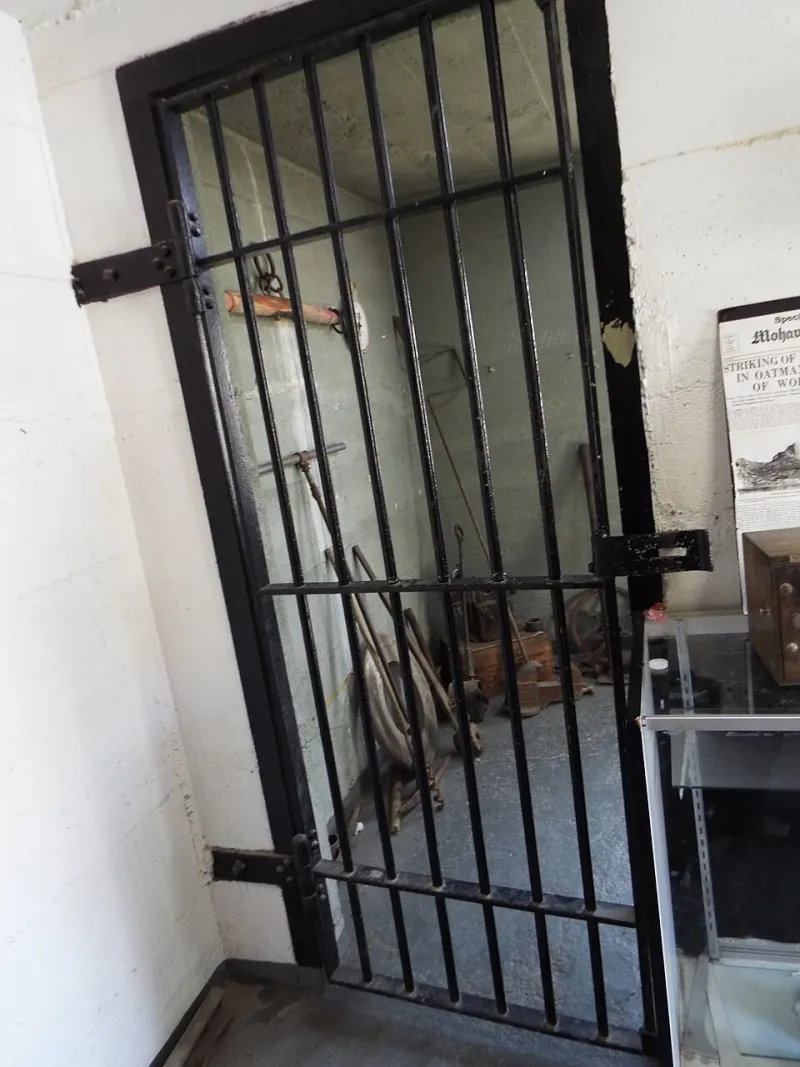
Photo: Marine 69-71, CC BY-SA 4.0, via Wikimedia Commons
Every night in the United States, nearly half a million people sit in local jails not because they have been convicted of any crime, but because they cannot afford to purchase their freedom. The cash bail system has evolved into a sophisticated industrial apparatus — one that extracts billions from the poorest Americans while generating enormous profits for a small class of bondsmen and insurers. Understanding how this machinery operates is the first step toward dismantling it.
A System Built on Poverty, Not Risk
The legal premise of bail is straightforward: a financial deposit ensures a defendant returns to court. In practice, however, the system functions less as a guarantee of appearance and more as a mechanism of economic sorting. Judges routinely set bail amounts that bear no relationship to a person's actual flight risk. Instead, the dollar figure reflects a de facto sentence — one imposed before any trial, any evidence, and any opportunity to mount a defense.
Consider the case of Kalief Browder, a teenager from the Bronx who was arrested in 2010 on a robbery charge his family could not disprove because they could not afford $3,000 bail. He spent three years on Rikers Island — two of them in solitary confinement — before the case was dismissed entirely. Browder died by suicide in 2015. His story is exceptional in its tragedy but not in its structure. Across the country, working-class and low-income defendants face the same arithmetic: pay or stay.
The numbers are stark. According to the Prison Policy Initiative, people detained pretrial make up the majority of the total jail population on any given day. Approximately 70 percent of those held pretrial are there for nonviolent offenses. And the median bail amount for felony charges has risen to levels that effectively guarantee incarceration for anyone earning below the median household income.
The Industry Behind the Cage
What distinguishes the American bail system from nearly every other democracy on earth is the presence of a for-profit intermediary: the commercial bail bond industry. In the United States and the Philippines — the only two countries that permit it — private bondsmen charge nonrefundable premiums, typically 10 to 15 percent of the total bail amount, to post bond on a defendant's behalf. A $50,000 bail requires a $5,000 premium that the defendant's family will never recover, regardless of the case's outcome.
This industry generates an estimated $2 billion annually. It is dominated by a handful of large insurance underwriters, including Lexington National Insurance and Bankers Insurance Group, whose financial interests are structurally aligned with keeping bail amounts high and reform efforts contained. To that end, the American Bail Coalition and its state affiliates spend millions each year lobbying legislatures, funding campaigns, and deploying their own lobbyists to kill pretrial reform bills before they reach a floor vote.
In states like Florida, Texas, and Louisiana, bail industry representatives have successfully inserted language into legislation that mandates cash bail for specific offense categories — regardless of individual risk assessments. The result is a policy environment shaped not by evidence of public safety outcomes but by the profit motives of an industry whose survival depends on the perpetuation of pretrial poverty.
The Cascade of Consequences
The harms of pretrial detention do not begin and end with incarceration. They radiate outward, touching every dimension of a person's life with a force that often proves irreversible.
Employment is the first casualty. Even a brief detention of 48 to 72 hours is sufficient to cost most hourly workers their jobs. Research published in the journal Criminology found that defendants detained for even two to three days were significantly more likely to be convicted — not because of greater guilt, but because they were more likely to accept plea deals simply to secure release. A plea deal, however, carries consequences: a criminal record that closes doors to employment, housing, professional licensing, and public benefits for years or decades.
Family stability fractures under the same pressure. Parents detained pretrial lose custody hearings. Children enter foster care systems. Rental agreements lapse. Utility accounts are shuttered. The financial cost of a single pretrial detention can destabilize a household that had no margin for disruption — a dynamic that compounds generational poverty rather than interrupting it.
Black and Latino defendants bear a disproportionate share of these harms. Studies consistently demonstrate that, controlling for charge severity and criminal history, Black defendants receive bail amounts approximately 35 percent higher than their white counterparts. The bail system does not merely reflect racial inequality; it amplifies and entrenches it.
What Abolition Looks Like in Practice
The abolitionist critique of cash bail is not theoretical. It is empirical, grounded in the documented outcomes of jurisdictions that have moved aggressively toward pretrial reform.
New Jersey enacted sweeping bail reform in 2017, replacing cash bail with a risk-assessment framework that emphasizes supervised release over financial conditions. In the years that followed, the jail population declined by nearly 44 percent. Court appearance rates held steady. Crime rates did not rise. The apocalyptic predictions of the bail industry — that streets would become unsafe, that defendants would disappear — did not materialize.
Washington, D.C. has operated a largely cashless pretrial system for decades, relying instead on supervised release programs and community-based support. Its court appearance rate consistently exceeds 88 percent — higher than jurisdictions that rely heavily on financial conditions. Illinois became the first state to fully eliminate cash bail statewide in 2023, under the Pretrial Fairness Act. Early data from counties that implemented the law suggest no meaningful increase in pretrial crime or court nonappearance.
These experiments share a common finding: the cash bail system does not produce the outcomes it claims to guarantee. It produces profit.
Reforming the System Is Not Enough
Partial reforms — lowering bail amounts, expanding personal recognizance releases, introducing risk-assessment tools — represent meaningful steps that relieve immediate harm. But advocates and organizers should approach them with clear eyes. Risk-assessment algorithms carry their own dangers, encoding historical racial disparities into ostensibly neutral calculations. A system that replaces cash bail with algorithmic surveillance is not a liberated system; it is a rebranded one.
The deeper demand of the pretrial justice movement is the elimination of the principle that freedom before trial should be conditioned on wealth, algorithmic scores, or any mechanism that substitutes punishment for process. The presumption of innocence is not a courtesy extended to those who can afford it. It is a foundational legal right — one that the bail industrial complex has spent decades selling back to the people it was meant to protect.
Dismantling that complex requires legislative action, prosecutorial reform, judicial accountability, and the defunding of the lobby apparatus that sustains it. It requires naming the industry for what it is: a racket built on human suffering, operating with legislative sanction, and long overdue for abolition.