Purchased Testimony: The Informant Economy That Sends Innocent People to Prison
In 1988, a man named Leslie White walked into a Los Angeles courtroom and did something extraordinary: he demonstrated, in meticulous detail, exactly how he had manufactured testimony against other inmates. Using only a telephone and a working knowledge of how the criminal legal bureaucracy communicated internally, White reconstructed confessions he had never actually heard. He had done it before. He would do it again — until he chose not to. His testimony before a grand jury cracked open a scandal that implicated dozens of cases in California's jailhouse informant system. Decades later, the structural conditions that made White's fabrications possible remain largely intact across the United States.
The question is not whether the system is broken. The question is whether it was ever designed to produce truth in the first place.
The Transactional Architecture of Informant Testimony
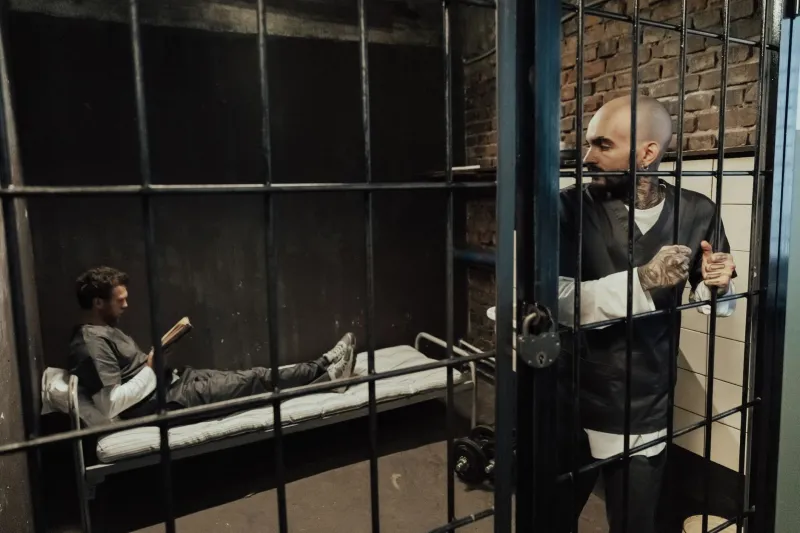
Jailhouse informants occupy a peculiar and powerful position within the carceral ecosystem. Incarcerated individuals who claim to have heard another detainee confess to a crime can approach prosecutors or law enforcement and offer that testimony in exchange for something of value. The currency varies: reduced sentences, transfers to safer or more comfortable facilities, dropped charges, access to commissary funds, or simply the leverage of having the state owe them a favor.
This is not a fringe practice. The Northwestern University School of Law's Center on Wrongful Convictions has identified informant testimony as the leading cause of wrongful convictions in capital cases in the United States. A 2004 study examining 111 death row exonerations found that nearly half involved the use of informant witnesses. The Innocence Project, which has helped exonerate more than 200 people through DNA evidence, consistently lists informant testimony among the primary contributing factors to wrongful conviction.
The incentive structure is, by design, corrupting. An informant facing a fifteen-year sentence has an overwhelming material interest in producing a story that prosecutors find useful — regardless of whether that story is true. Defense attorneys often describe the dynamic as paying for evidence with freedom, a transaction that would be considered bribery in almost any other context.
Documented Betrayals: Cases That Illuminate the Pattern
The record of fabricated informant testimony is neither abstract nor rare. In 2015, a major investigation by the Orange County Register and the American Civil Liberties Union exposed a sprawling secret database maintained by the Orange County Sheriff's Department that tracked informant use across hundreds of cases. Prosecutors had, for years, concealed the existence of this system from defense attorneys — a constitutional violation that ultimately led to the dismissal of charges against a man accused of mass murder and forced the recusal of an entire district attorney's office from dozens of cases.
In Illinois, a series of exonerations tied to the testimony of a single informant named Lamon Leroy Flanery revealed how one motivated liar could cascade through the system, touching case after case before anyone in authority chose to look closely. Flanery had testified in exchange for leniency across multiple prosecutions. Several of the men he helped convict spent years in prison for crimes they did not commit.
These are not isolated failures of individual bad actors. They are the predictable outputs of a system that creates powerful incentives for false testimony and then provides almost no institutional mechanism for detecting or deterring it.
The Disclosure Problem
At the constitutional core of this issue lies the Supreme Court's 1972 ruling in Giglio v. United States, which held that prosecutors are required to disclose to the defense any deals made with witnesses in exchange for testimony. In theory, this obligation should expose the transactional nature of informant arrangements and allow defense attorneys to challenge witness credibility before juries.
In practice, the Giglio obligation is routinely circumvented, minimized, or ignored. Informal arrangements — a quiet word about favorable treatment, a tacit understanding about how a case might be handled — frequently go undocumented and therefore undisclosed. Prosecutors who rely on informants have every incentive to keep the terms of those arrangements vague enough to avoid triggering disclosure requirements. Courts, for their part, have rarely imposed meaningful sanctions for Giglio violations, creating an enforcement gap that the system has learned to exploit.
Defense attorneys working in public defender offices — themselves chronically underfunded and overburdened — often lack the investigative resources to independently surface informant histories, prior deals, or patterns of testimony across jurisdictions. The informational asymmetry is severe and deliberately so.
What Reform Looks Like — and Why It Faces Resistance
A growing coalition of wrongful conviction advocates, defense attorneys, and reform-minded legislators has begun pushing for structural changes to how informant testimony is governed. The proposals vary in ambition but converge on several core principles.
Mandatory corroboration requirements would prohibit conviction based solely on the uncorroborated testimony of an incentivized informant. California passed such a law in capital cases following the Leslie White scandal, though advocates argue the requirement should extend across all felony prosecutions.
Centralized informant registries would require law enforcement agencies to maintain and disclose comprehensive records of every instance in which an individual has served as an informant, what they received in exchange, and how their prior testimony has held up. Several jurisdictions have experimented with versions of this approach, though implementation has been inconsistent.
Pre-trial reliability hearings would empower judges to evaluate the credibility and potential bias of informant witnesses before their testimony reaches a jury — a procedural safeguard that exists in other evidentiary contexts but has rarely been applied to informants.
Prosecutorial accountability mechanisms would establish consequences for Giglio violations beyond the current near-immunity that prosecutors enjoy. Bar discipline for Brady and Giglio violations remains vanishingly rare, a fact that significantly diminishes the deterrent value of the constitutional disclosure obligation.
The resistance to these reforms is instructive. Prosecutors' associations have consistently opposed informant restrictions, arguing that informant testimony is a necessary tool for penetrating closed criminal networks. This argument contains a kernel of legitimate concern — informants have occasionally provided genuine intelligence about serious ongoing criminal activity — but it does not justify the current system's wholesale abdication of reliability standards. A tool that is useful in some contexts can still require rigorous controls. The absence of those controls is a choice, not a necessity.
The Abolitionist Frame
For those engaged in the broader project of dismantling the carceral state, the informant economy represents something more than a procedural flaw. It is a window into the foundational logic of a system that prioritizes conviction rates over truth, that treats incarcerated people as resources to be extracted rather than human beings deserving of dignity, and that insulates itself from accountability through procedural complexity and institutional inertia.
The men and women who have lost years — sometimes decades — of their lives to fabricated informant testimony are not collateral damage. They are the product of a system operating exactly as designed: efficiently processing bodies through a legal machinery indifferent to their guilt or innocence.
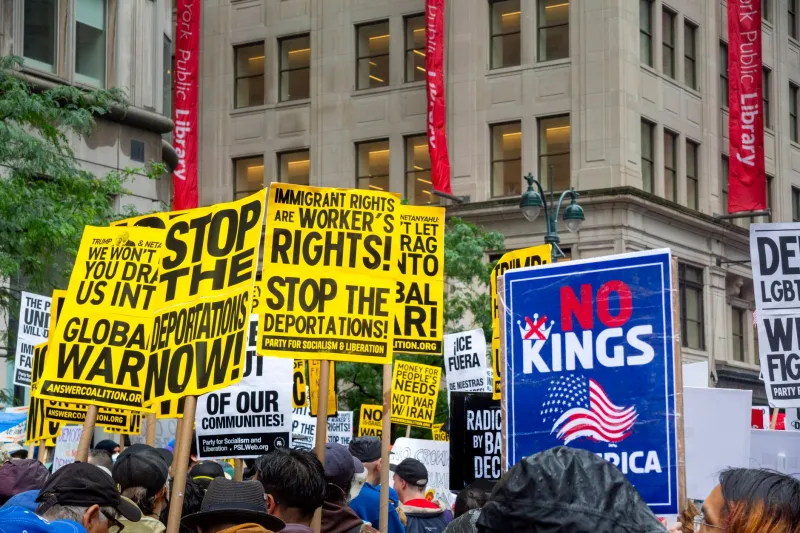
Reforming the informant system requires more than technical fixes, though technical fixes matter. It requires a political commitment to treating wrongful conviction not as an acceptable margin of error but as a fundamental indictment of the system's legitimacy. It requires investing in public defense infrastructure, strengthening disclosure obligations with real enforcement, and building political will to challenge the prosecutorial power that has made this practice so durable.
The witness stand should not be for sale. That it has been — systematically, for decades, with institutional blessing — is not a secret. It is a policy. And policies can be changed.