Stitched Into Servitude: The Constitutional Loophole That Turned American Prisons Into Factories
When the Thirteenth Amendment was ratified in 1865, abolitionists celebrated the end of chattel slavery. What many did not fully reckon with — though some warned of it immediately — was the exception clause sewn into the amendment's very first sentence. "Neither slavery nor involuntary servitude," the text reads, "except as a punishment for crime whereof the party shall have been duly convicted, shall exist within the United States."
Those eleven words — except as a punishment for crime — have done more to sustain coerced labor in America than almost any other legal provision in the nation's history. They are the constitutional foundation upon which a billion-dollar prison labor industry has been constructed, brick by brick, contract by contract, over the course of more than 150 years.
The Architecture of Legal Extraction
To understand how prison labor became an industry, one must first understand the legal scaffolding that makes it possible. Incarcerated people in the United States are not, in most jurisdictions, considered employees under federal labor law. The Fair Labor Standards Act — which establishes minimum wage protections and overtime requirements for American workers — does not apply inside prison walls. The National Labor Relations Act, which guarantees workers the right to organize and bargain collectively, is similarly inapplicable.
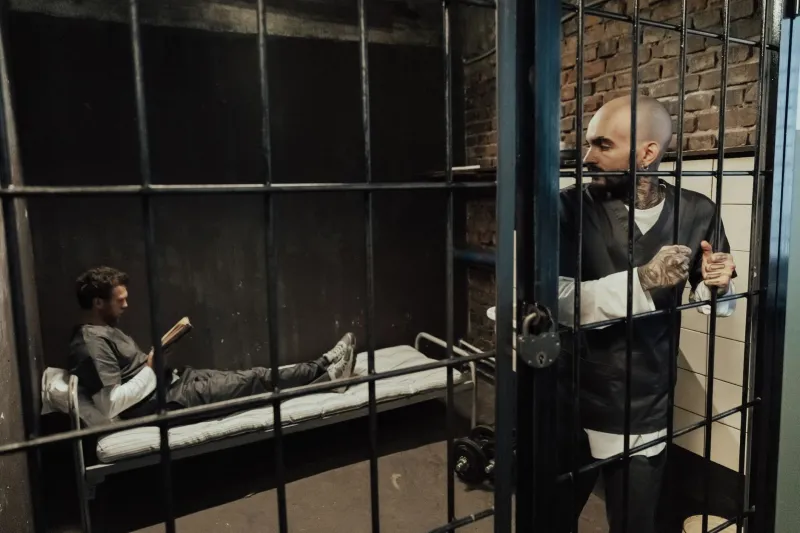
The result is a workforce stripped of virtually every protection that took organized labor a century to win. Incarcerated workers in state facilities are typically paid between eight cents and two dollars per hour, depending on the state. In Texas, Arkansas, and Georgia, the prevailing wage for many prison labor assignments is precisely zero. Not a reduced wage. Not a minimum wage. Nothing.
State prison industries programs — operating under names such as UNICOR at the federal level and various branded entities across individual states — function as vertically integrated manufacturing operations. They produce office furniture, military uniforms, license plates, circuit boards, textiles, and agricultural goods. They process call center traffic and perform data entry. In some states, incarcerated people fight wildfires for roughly one dollar per hour, performing work that civilian contractors charge thousands of dollars a day to perform.
The Corporate Beneficiaries
Beyond state-operated prison industries, a secondary market has flourished in which private corporations contract directly with correctional facilities to access incarcerated labor. Companies across sectors — including food processing, apparel manufacturing, electronics assembly, and logistics — have at various points in their corporate histories utilized this arrangement.
The appeal is straightforward: a captive workforce that cannot quit, cannot strike, cannot file wage complaints, and costs a fraction of what any other labor source would require. Overhead is minimal because the state absorbs the cost of housing, feeding, and supervising the workforce. Risk is negligible because the labor supply is legally compelled.
Private prison corporations add another layer to this economy. Companies such as CoreCivic and the GEO Group operate facilities under government contracts that in some cases include occupancy guarantees — provisions requiring states to maintain a minimum percentage of beds filled or pay financial penalties regardless. Critics have long argued that such clauses create a structural incentive to maximize incarceration rather than reduce it, transforming recidivism from a social failure into a contractual asset.
Who Bears the Cost
The human toll of this system is not abstract. It is measured in the lives of the more than 1.9 million people currently held in American correctional facilities, the majority of whom are disproportionately Black, Latino, and poor — populations whose overrepresentation in the carceral system is itself a product of discriminatory policing, prosecutorial practices, and sentencing structures.
For incarcerated workers, the earnings from prison labor rarely translate into meaningful economic security. In many states, a portion of wages — where wages exist at all — is automatically deducted to cover the cost of incarceration itself, a practice critics describe as debt bondage. Additional deductions may fund victim restitution accounts, court fees, or facility charges for basic necessities. By the time these deductions are applied, little or nothing remains.
When people are released, they exit the carceral system with criminal records that restrict employment, housing, and civic participation — and with savings, in many cases, that amount to less than fifty dollars. The labor extracted during their incarceration enriched the state and its corporate partners. It did not build a foundation for their reintegration.
The Growing Movement for Abolition of Carceral Labor
Resistance to prison labor exploitation is neither new nor marginal. Incarcerated workers have organized work stoppages, hunger strikes, and coordinated labor actions for decades. The 2016 national prison strike — one of the largest in American history — was explicitly framed as a labor action, with participants citing the Thirteenth Amendment's exception clause as a form of slavery that demanded direct confrontation.
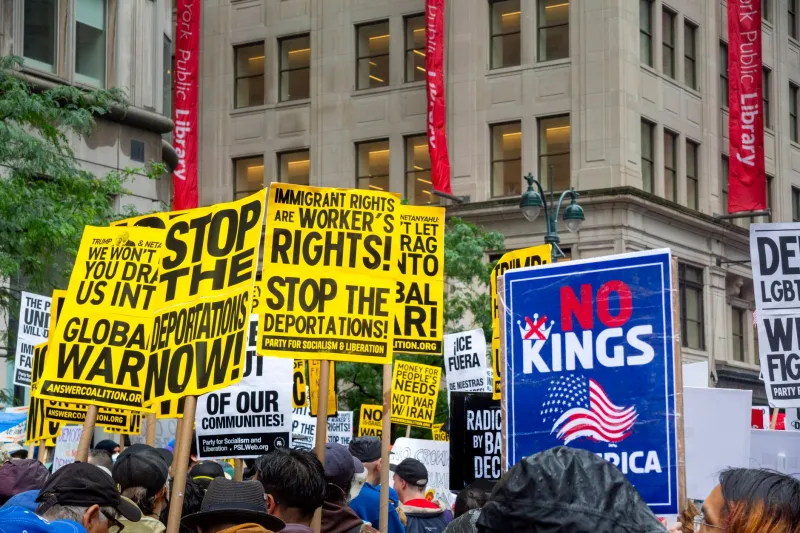
Outside prison walls, a growing coalition of legal advocates, labor organizers, and abolitionist groups has mounted sustained campaigns to close the constitutional loophole that makes compelled prison labor possible. Several states have introduced or passed amendments to their own constitutions eliminating the punishment exception from state-level prohibitions on slavery. Colorado became the first to do so in 2018, followed by Nebraska, Utah, Alabama, Oregon, Tennessee, and Vermont.
At the federal level, the Abolition Amendment — introduced in Congress to remove the exception clause from the Thirteenth Amendment itself — has attracted increasing attention, though it has yet to advance through either chamber. Advocates argue that without federal action, the patchwork of state reforms will leave millions of incarcerated workers in states with no political will to act without any protection whatsoever.
Reform Is Not Enough
Some policymakers have proposed incremental remedies: extending minimum wage protections to incarcerated workers, prohibiting deductions that eliminate earnings entirely, or regulating the conditions under which corporations may access prison labor. These proposals, while not without value, risk obscuring the deeper structural problem.
The prison labor economy does not persist in spite of the legal framework — it persists because of it. As long as incarceration remains a legally sanctioned exception to prohibitions on forced labor, the financial incentives driving mass incarceration will remain intact. Corporations will continue to lobby for policies that maximize the available labor pool. Private prison operators will continue to negotiate occupancy guarantees. States will continue to balance budgets on the backs of the people they cage.
True abolition of carceral labor requires more than wage floors. It requires dismantling the legal architecture that treats conviction as a license to compel work without consent, eliminating the corporate contracts that transform human captivity into a supply chain, and confronting honestly the degree to which the American economy has been built — and continues to be sustained — by the labor of people it has stripped of freedom.
The Thirteenth Amendment was supposed to mark the end of slavery in America. For the people stitched into prison uniforms and assigned to production lines for pennies an hour, it marked a transformation, not a termination. Abolition, the kind that is complete and not merely rhetorical, remains unfinished work.