Traffic Stops as Deportation Warrants: How Local Police Became Federal Immigration Agents — and How Cities Are Breaking Free
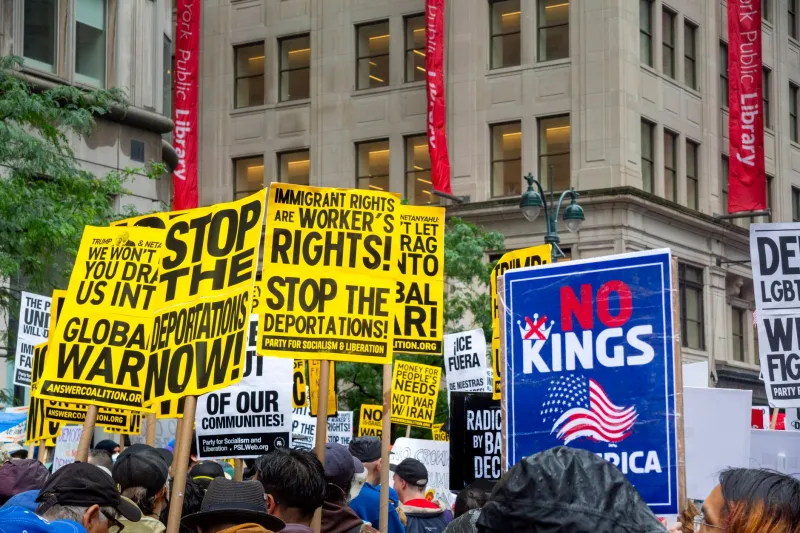
On a Tuesday morning in a mid-sized American city, a man is pulled over for a cracked windshield. He is issued a citation. He is also, without his knowledge, run through a federal immigration database. Within forty-eight hours, he is transferred to an Immigration and Customs Enforcement detention facility. His children wait at school for a parent who will not arrive.
This is not a hypothetical. It is a daily occurrence in hundreds of jurisdictions across the country — the predictable consequence of a legal and administrative infrastructure that has conscripted local police departments into the service of federal immigration enforcement. Understanding how this machinery was assembled is the first step toward dismantling it.
The Architecture of Entanglement
The most formalized mechanism binding local law enforcement to federal immigration authorities is the 287(g) program, authorized under Section 287(g) of the Immigration and Nationality Act. Under this arrangement, the Department of Homeland Security deputizes local and state officers to perform immigration enforcement functions — checking immigration status, issuing detainers, and initiating removal proceedings — that would otherwise fall exclusively to federal agents.
As of 2024, more than 130 law enforcement agencies across 27 states operate under active 287(g) agreements. The program has expanded dramatically during periods of aggressive federal immigration policy, with participation surging each time the executive branch has signaled its intention to intensify deportation operations.
But 287(g) agreements represent only the most visible layer of entanglement. A secondary infrastructure of information-sharing operates with far less public scrutiny. The Secure Communities program — and its successor, the Priority Enforcement Program — routes fingerprints collected at local jails directly to DHS databases, allowing immigration authorities to flag individuals for detention before they are even released from local custody. The result is a system in which a misdemeanor arrest, regardless of whether it results in conviction, can function as a deportation trigger.
Interoperability between local records systems and federal databases compounds the exposure further. In jurisdictions that share booking information, gang databases, or license plate reader data with federal agencies, the surveillance net extends well beyond individuals who have had any formal contact with the criminal legal system.
The Human Cost of Compliance
The consequences of this entanglement fall with devastating precision on immigrant communities — and, by extension, on the broader fabric of those communities.
Public health researchers have documented what community organizers have long observed: in jurisdictions with active 287(g) agreements, immigrant residents avoid hospitals, decline to report crimes, and withdraw from civic participation. The fear of incidental contact with law enforcement suppresses the social behaviors that constitute community safety. Witnesses to crimes stay silent. Victims of domestic violence decline to call for help. Children miss medical appointments.
The criminological evidence is equally corrosive to the enforcement rationale. Study after study has found no meaningful correlation between local immigration enforcement and reduced crime rates. To the contrary, several analyses suggest that sanctuary policies — which limit local cooperation with federal immigration authorities — are associated with lower rates of violent crime, likely because they preserve the trust necessary for communities to engage with law enforcement at all.
What the 287(g) program and its associated mechanisms do produce, with considerable efficiency, is deportations. And deportations produce family separations, economic devastation, and the permanent exile of people who have built their lives, raised their children, and planted their roots in American soil.
The Municipal Resistance
A growing number of cities and counties have refused to participate in this system — and their experiences offer a practical roadmap for communities seeking to protect their immigrant residents.
San Francisco's sanctuary ordinance, first enacted in 1989 and repeatedly strengthened in subsequent decades, prohibits city employees from using city resources to assist federal immigration enforcement absent a judicial warrant. Chicago, Philadelphia, and New York have adopted comparable frameworks, each tailored to local political conditions but united by the principle that local government exists to serve all residents, not to serve as an auxiliary arm of federal deportation machinery.
The legal foundation for these policies is robust. Courts have consistently held that the federal government cannot commandeer local law enforcement resources to carry out federal programs — a principle known as the anti-commandeering doctrine, rooted in the Tenth Amendment and affirmed in cases including Printz v. United States. Local jurisdictions have no constitutional obligation to enforce federal immigration law, and they have affirmative authority to decline.
More recent reforms have gone beyond passive non-cooperation. Several jurisdictions now prohibit law enforcement agencies from inquiring about immigration status during routine interactions, restrict data-sharing with federal immigration databases, and require that any request for a civil immigration detainer be accompanied by a judicial warrant before local resources may be used to comply.
A Strategic Roadmap for Community Action
For communities seeking to sever the ties between local policing and federal immigration enforcement, the path forward requires simultaneous engagement at multiple levels.
Demand transparency first. Many residents do not know whether their jurisdiction operates under a 287(g) agreement or participates in Secure Communities data-sharing. Public records requests directed to local police departments and county sheriffs can surface these arrangements. Advocacy organizations should publish and distribute this information widely.
Organize at the city council and county commission level. Sanctuary policies are enacted through local ordinance — which means they are reachable through the standard mechanisms of municipal democracy. Constituent pressure, coalition building, and electoral accountability have moved jurisdictions from full cooperation to near-complete non-participation within a single election cycle.
Challenge 287(g) contracts at renewal. These agreements are not permanent. They require periodic renewal, and renewal processes create discrete windows for organized opposition. Coalition campaigns targeting renewal hearings have successfully blocked re-authorization in multiple jurisdictions.
Litigate detainer compliance. Civil immigration detainers are requests, not commands. Jurisdictions that honor detainers without judicial warrants expose themselves to Fourth Amendment liability, and civil rights organizations have successfully pursued damages in cases where individuals were held unlawfully on civil detainers. Publicizing this liability has persuaded risk-averse local governments to revise their detainer policies.
Build toward comprehensive data firewalls. Sanctuary ordinances that address only detainer compliance leave open the data-sharing channels through which much entanglement now flows. Comprehensive protection requires restricting the transmission of local records — booking data, license plate scans, gang registry entries — to federal immigration databases.
The Abolitionist Stakes
The conscription of local police into immigration enforcement is not a peripheral issue within the broader struggle against carceral systems. It is a case study in how the state extends its capacity for punishment and control by networking its institutions — local, state, and federal — into a seamless apparatus of surveillance and removal.
The communities that have resisted this apparatus have done so by insisting on a foundational principle: that government exists to protect all people within its jurisdiction, not to sort them by immigration status and deliver the vulnerable to federal authorities. That insistence is both a moral position and a practical policy framework.
Every traffic stop that does not become a deportation. Every misdemeanor arrest that does not trigger a federal detainer. Every family that remains intact because a city chose non-cooperation over compliance. These are not small victories. They are proof that the machinery can be interrupted — and that communities, organized and persistent, hold the tools to dismantle it.