Badge, Ballot, and Backlash: How Police Unions Are Engineering the Death of Reform—and How Organizers Are Fighting Back
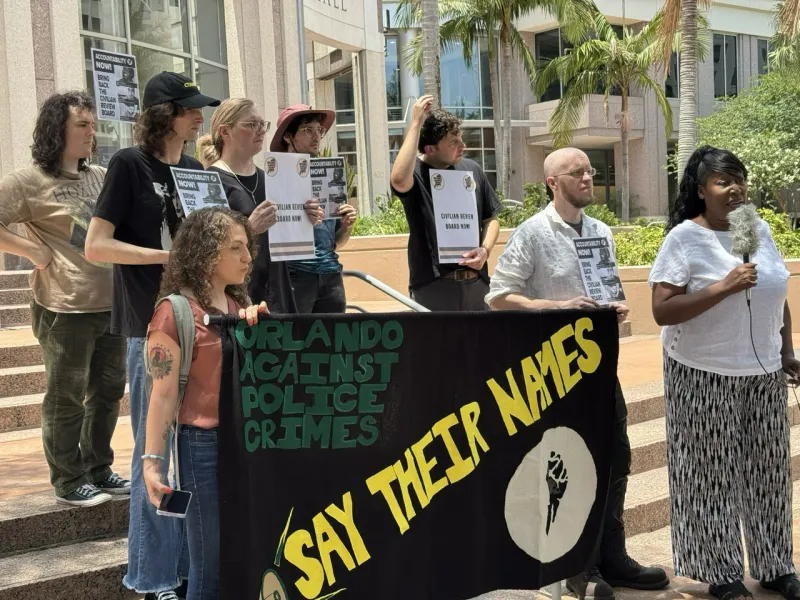
Photo: community organizers holding signs at city hall protest police accountability, via i.snap.as
The Counter-Revolution Has a Budget
When Minneapolis voters rejected a 2021 ballot measure to replace the city's police department with a new Department of Public Safety, the outcome was celebrated in law enforcement circles as a decisive rebuke of the abolitionist movement. What received far less coverage was the machinery behind that result: a coordinated, well-funded opposition campaign anchored by the Minneapolis Police Officers Federation and its national allies, which deployed misleading crime trend data, saturated local airwaves with fear-laden advertising, and cultivated relationships with local media figures who amplified the union's preferred narrative.
This was not an isolated incident. From Austin, Texas, to Portland, Oregon, to cities across the American South and Midwest, police unions have transformed themselves from labor organizations into sophisticated political operations—ones explicitly designed to neutralize the momentum that emerged from the 2020 uprising following George Floyd's murder. Understanding how they operate is not merely an academic exercise. For organizers working to dismantle carceral systems and redirect public resources toward genuine community safety, it is a matter of strategic survival.
Anatomy of a Fear Campaign
Police union opposition to defunding efforts typically proceeds along three overlapping tracks: narrative construction, electoral intervention, and bureaucratic obstruction.
On the narrative front, unions have become adept at cherry-picking crime statistics to create the impression that any reduction in police budgets produces immediate public danger. In Seattle, after the City Council reallocated roughly $3.5 million from the police budget in 2020, the Seattle Police Officers Guild issued a series of public statements attributing every subsequent spike in reported property crime to that decision—omitting, consistently, that crime trends fluctuate for dozens of documented reasons unrelated to departmental headcount, and that Seattle's homicide rates remained comparable to pre-reallocation baselines when examined over multi-year periods.
This statistical sleight of hand is almost always paired with emotionally charged media outreach. Unions maintain relationships with local television news operations, feeding them footage, story tips, and sympathetic spokespersons who can fill airtime in the 24-hour news cycle. The goal is not to win a policy debate on the merits—it is to establish an ambient sense of threat in the public consciousness that makes any reduction in police funding feel reckless.
Electorally, police unions have expanded their political action committees and sharpened their endorsement strategies. The International Brotherhood of Police Officers and the Fraternal Order of Police—the two largest national law enforcement labor bodies—have together contributed tens of millions of dollars to local and state races over the past five years, with particular emphasis on district attorney contests, city council races, and mayoral elections in cities where defunding campaigns have gained traction. In many cases, they do not simply back the most conservative candidate; they actively recruit primary challengers against reform-minded incumbents, a tactic that has unseated progressive council members in cities including Cleveland and Baltimore.
Bureaucratic obstruction represents a third and often underappreciated avenue of resistance. Through collective bargaining agreements, unions have secured contract provisions that insulate officers from civilian oversight, complicate disciplinary procedures, and—critically—make it procedurally difficult to reduce departmental staffing levels without triggering costly arbitration. These provisions function as a structural firewall against reform even when reformers win at the ballot box.
Where Organizers Are Pushing Back
The picture is not uniformly bleak. In several cities, coalitions have developed counterstrategies that are yielding measurable results, and their approaches deserve close study.
In Denver, the coalition behind the Support Team Assisted Response (STAR) program—which deploys mental health professionals rather than armed officers to certain 911 calls—confronted sustained union opposition by building an evidentiary record that was nearly impossible to dismiss. Organizers worked with academic partners at local universities to compile response-time data, recidivism metrics, and resident satisfaction surveys across the program's first three years. When the Denver Police Protective Association argued before the City Council that the program was undermining public safety, coalition members appeared with binders of contradictory evidence and testimony from residents who had directly benefited from unarmed crisis intervention. The program not only survived but expanded.
The lesson Denver's organizers draw is straightforward: do not fight narrative with counter-narrative alone. Fight narrative with documentation so granular and locally specific that dismissing it requires dismissing the lived experience of constituents the council members are accountable to.
In Philadelphia, the Coalition for a Just District Attorney has concentrated significant energy on the electoral terrain that police unions have made their own. Rather than ceding campaign infrastructure to law enforcement PACs, the coalition has built a year-round voter contact operation in the neighborhoods most directly harmed by over-policing—North Philadelphia, Kensington, and West Philadelphia—training residents as canvassers and developing relationships with community institutions that can mobilize turnout during low-visibility local elections. The explicit recognition animating this work is that police unions punch above their weight electorally because they show up consistently in primaries and off-cycle races where overall turnout is low. The antidote is not matching their spending—it is expanding the electorate in communities that have the most at stake.
In Los Angeles, where the Police Protective League has historically wielded enormous influence over the City Council, a coalition including Black Lives Matter Los Angeles and the Catalyst Project has focused sustained attention on exposing the gap between union political spending and the interests of rank-and-file officers on issues like wages, mental health support, and working conditions. By engaging line officers directly—not to rehabilitate the institution, but to complicate the union leadership's claim to speak for all of its members—organizers have occasionally fractured the appearance of monolithic law enforcement opposition to reform measures.
A Playbook for Communities Still in the Fight
For organizers facing organized union opposition in their own cities, the experiences of Denver, Philadelphia, and Los Angeles suggest several durable principles.
Build the evidentiary infrastructure before you need it. Commission or collaborate on independent data collection on the programs you are defending. When the opposition manufactures a crisis narrative, you need to be able to respond within hours with locally grounded counter-evidence.
Map the money. File public records requests on police union PAC contributions, identify which council members and mayors have received union support, and make that information publicly accessible. Voters deserve to know whose interests are shaping public safety policy.
Compete on the electoral terrain. Identify every race—city council, school board, district attorney, county commissioner—where law enforcement PACs have intervened, and build the voter contact infrastructure to compete in those contests. Off-cycle elections are where reform is often won or lost.
Center impacted community members. The most effective testimony against fear-based narratives is the testimony of people who have been directly harmed by over-policing and who are articulating, in their own voices, what genuine safety would look like in their neighborhoods. No union spokesperson can rebut that.
Expose the contract provisions. Most residents have never read their city's police union contract. Making those provisions legible—explaining plainly how arbitration clauses and disciplinary shields undermine accountability—transforms an abstract policy debate into a concrete accountability question.
The defunding backlash is real, it is organized, and it is generously resourced. But it is not invincible. Every city where reform has survived union opposition has done so because organizers refused to treat the political terrain as fixed, built durable coalitions that outlasted any single campaign, and brought the weight of documented community experience to bear against the machinery of institutional fear. That is the work. And it is work that can be done.