Neighbors as First Responders: The Community-Led Safety Networks Rewriting What Protection Means

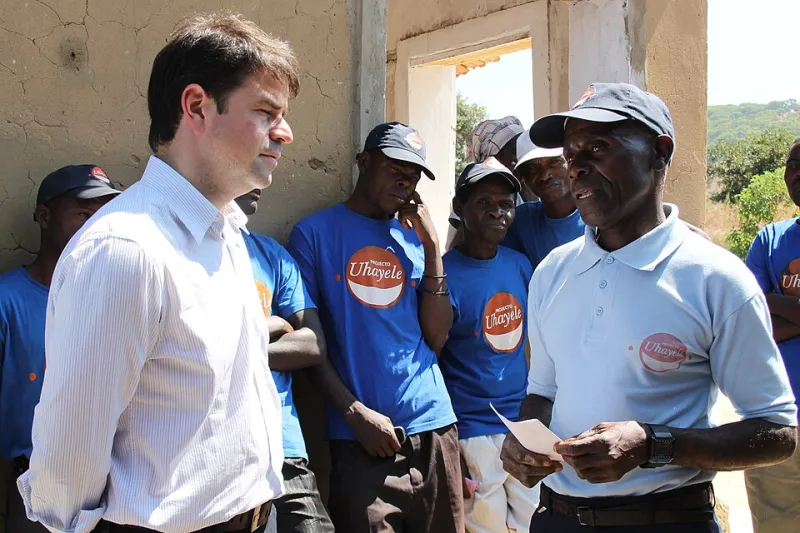
Photo: community meeting neighbors mutual aid grassroots organizing urban, via img.freepik.com
The question abolitionists are most frequently asked — sometimes in good faith, sometimes not — is: What do you do when something goes wrong? The assumption embedded in that question is that "something going wrong" requires a police response. The communities profiled here have spent years proving otherwise.
Across the United States, a diverse and expanding ecosystem of community-based safety programs is demonstrating that the skills required to respond to a mental health crisis, a domestic dispute, a neighbor experiencing homelessness, or a teenager in distress are not skills that police academies teach. They are skills that emerge from sustained relationships, cultural competency, and genuine investment in community wellbeing. The difference between what these programs offer and what a patrol car delivers is not merely philosophical — it is measurable.
Denver's STAR Program: A Model That Spread Because It Worked
In June 2020, the city of Denver launched the Support Team Assisted Response program — STAR — as a pilot operating out of a single fire station. The model was straightforward: route certain 911 calls to a two-person team consisting of a mental health clinician and a paramedic rather than to police. No weapons. No badges. No arrest authority.
In its first six months, the STAR team responded to over 700 calls. Officers were dispatched to zero of them for backup. Not a single arrest was made. The program expanded. By 2022, multiple STAR vans were operating across the city, and Denver's own data showed that in areas where the program was active, low-level crime calls — the category most likely to result in unnecessary police contact — decreased measurably.
Denver's experience has been replicated, in varying forms, in Eugene, Oregon, where the CAHOOTS program has operated since 1989, demonstrating three decades of evidence that communities do not need armed responders for the vast majority of calls that currently consume police resources. Roughly 17 percent of Eugene's 911 volume is now routed to CAHOOTS — calls involving mental health crises, welfare checks, and conflict resolution. The program's cost per call is a fraction of a police response.
Durham, North Carolina: Mutual Aid as Infrastructure
In Durham, the conversation has moved beyond diversion programs embedded within city government. Organizations like Serve Your City and the Durham Mutual Aid Coalition operate outside formal municipal structures, building what organizers describe as "infrastructure for survival" in communities that have historically received surveillance rather than services.
Durham's mutual aid networks distribute food, coordinate emergency housing referrals, staff harm reduction tables at community events, and — critically — maintain a network of trained community members who can respond to neighbors in crisis without involving law enforcement. When a community member is experiencing a psychiatric episode, the response is not a call to 911. It is a call to someone who knows the person, knows the neighborhood, and has been trained in de-escalation techniques that prioritize relationship over compliance.
Organizers are candid about the limitations. "We are not equipped to handle every situation," says one Durham mutual aid coordinator who asked not to be named for this article. "But neither is a patrol officer. The difference is that when we can't handle something, we know how to connect people to resources that can actually help. A cop's options are arrest or leave. Our options are much wider."
Ella Baker Center and the Power of Peer Navigators
In Oakland, California, the Ella Baker Center for Human Rights has pioneered a model of community safety that centers people with direct experience of incarceration as the most credible and effective responders to community conflict. The Center's Books Not Bars and Restore Oakland programs train formerly incarcerated individuals as community navigators — people who can intervene in escalating situations, connect neighbors to services, and mediate disputes before they reach a point of crisis.
The logic is both empirical and relational. Research on violence interruption programs consistently demonstrates that credible messengers — individuals who share lived experience with those they are trying to reach — achieve outcomes that neither police officers nor outside social workers can replicate. Trust is not abstract. It is built over time, through presence, through shared history, and through demonstrated commitment to a community's actual wellbeing rather than its statistical management.
Oakland's experience with these programs has also surfaced one of the central challenges facing community safety initiatives nationwide: funding instability. Municipal governments that enthusiastically cite violence interruption data when it is politically convenient frequently defund or deprioritize these programs when budgets tighten or when police unions apply pressure. The Ella Baker Center has been explicit about this dynamic, naming it publicly and organizing against it.
Harm Reduction as Safety Work
Any honest accounting of community safety must grapple with the role of harm reduction — an approach to drug use, mental health, and related issues that prioritizes keeping people alive and connected to community over criminalization and forced abstinence. In cities including Philadelphia, Seattle, and Baltimore, harm reduction organizations operate as de facto first responders in communities where drug use intersects with poverty, homelessness, and trauma.
Philadelphia's Prevention Point distributes naloxone, provides sterile syringe access, and deploys outreach workers into neighborhoods experiencing high rates of overdose. These workers are not law enforcement. They are neighbors, many of whom have their own histories with addiction. When someone overdoses in a Kensington alley, it is often a Prevention Point outreach worker — not a police officer — who reverses it.
The distinction matters for reasons beyond the immediate intervention. Police contact, even in the context of an overdose response, frequently deters future help-seeking. People who fear arrest do not call 911. Harm reduction workers, by contrast, are perceived as safe — and that perception saves lives.
Building the Roadmap: What Other Communities Can Learn
For organizers and community members exploring what alternatives to policing might look like in their own cities, the programs profiled here offer several consistent lessons.
Start with what already exists. Mutual aid networks, faith communities, tenant associations, and neighborhood groups often already perform informal safety functions. The work of building alternatives frequently begins with formalizing and resourcing what communities are already doing.
Invest in training. De-escalation, crisis response, and conflict resolution are learnable skills. Organizations including Cure Violence and the National Conflict Resolution Center offer training curricula that community groups can adapt. The credibility of community responders grows with demonstrated competence.
Document everything. The political case for alternative safety programs depends on data. Track calls, outcomes, and costs. When city councils ask whether these programs work, the answer must be backed by numbers as well as stories.
Build coalitions across movements. The communities most in need of safety alternatives are the same communities fighting for housing justice, healthcare access, and economic equity. Safety is not a siloed issue. The organizations doing this work most effectively understand that policing is one node in a larger system of control — and that dismantling it requires pressure across multiple fronts simultaneously.
The question is not whether communities can keep themselves safe without police. In many cases, they already are. The question is whether the political will exists to resource, protect, and expand what they have built.